
Why I Specialize in Emotionally Focused Therapy (EFT)

With so many counseling approaches available, it can be hard to know what truly makes a difference. In this post, ALCS therapist Carolyn Dixon, LCSW shares why she specializes in Emotionally Focused Therapy (EFT), weaving together both research and her own personal story of how understanding emotions and connection transformed her relationships.
There are many approaches to counseling, all with the shared goal of helping people heal from hard places. Over time, most counselors find an approach that truly resonates with them—EMDR, CBT, Somatic Experiencing, DBT, Internal Family Systems, and many others.
I always find it interesting to talk with other counselors about what they’ve gravitated toward, and why.
For me, that approach is Emotionally Focused Therapy (EFT) for couples, individuals, and families.
Honestly, I didn’t so much choose EFT as it chose me.
I always find it interesting to talk with other counselors about what they’ve gravitated toward, and why.
For me, that approach is Emotionally Focused Therapy (EFT) for couples, individuals, and families.
Honestly, I didn’t so much choose EFT as it chose me.
What Drew Me to EFT
A friend of mine was reading Hold Me Tight by Dr. Sue Johnson. As I looked up the book, the author, and the EFT website, I quickly realized that EFT is built on four core principles ... principles that had already deeply shaped my own life and healing journey.
1. Attachment Theory
From the cradle to the grave, the science of love and attachment teaches us that we function best in safe, secure relationships.
We are wired for connection.
1. Attachment Theory
From the cradle to the grave, the science of love and attachment teaches us that we function best in safe, secure relationships.
We are wired for connection.
2. Emotion-Focused
Our emotions live in our bodies and give us essential information about what we need.
The Latin root of the word emotion means “to move,” reminding us that emotions are designed to lead us somewhere.
Research even shows that when the emotional centers of the brain are damaged, people struggle to make simple decisions...like choosing between a red shirt or a white one. Emotions aren’t the problem; they are a vital part of helping us live wisely and fully.
Our emotions live in our bodies and give us essential information about what we need.
The Latin root of the word emotion means “to move,” reminding us that emotions are designed to lead us somewhere.
Research even shows that when the emotional centers of the brain are damaged, people struggle to make simple decisions...like choosing between a red shirt or a white one. Emotions aren’t the problem; they are a vital part of helping us live wisely and fully.
3. Experiential
EFT isn’t just about talking about problems.
It’s about helping people connect the 18 inches between their head and their heart, learning to identify what they feel and share it vulnerably with a counselor, spouse, or safe person.
EFT isn’t just about talking about problems.
It’s about helping people connect the 18 inches between their head and their heart, learning to identify what they feel and share it vulnerably with a counselor, spouse, or safe person.
4. Highly Researched
EFT meets the gold standard of the American Psychological Association. It is empirically supported, proven effective through research, and taught through a clear, structured model.
EFT meets the gold standard of the American Psychological Association. It is empirically supported, proven effective through research, and taught through a clear, structured model.
How This Became Personal for Me
Shortly after Donnie and I got married (I had just turned 20, and he was 22), I honestly thought I had made a huge mistake.
He was planning to go into ministry, so divorce didn’t feel like an option. But I felt deeply stuck.
We began counseling and, over time, saw four different therapists. Eventually, I attended an event where David Ferguson (founder of Intimate Life Ministries in Austin, TX) spoke...and something finally clicked.
I realized how disconnected my thoughts and feelings were from each other.
Because I didn’t understand my own emotions, I struggled to share my inner world. When Donnie and I disagreed, I often came across as angry or rejecting. What I didn’t recognize at the time was that underneath my anger were hurt feelings.
Once I began to see that, the next challenge was learning how to share those feelings, something that felt incredibly vulnerable to me.
He was planning to go into ministry, so divorce didn’t feel like an option. But I felt deeply stuck.
We began counseling and, over time, saw four different therapists. Eventually, I attended an event where David Ferguson (founder of Intimate Life Ministries in Austin, TX) spoke...and something finally clicked.
I realized how disconnected my thoughts and feelings were from each other.
Because I didn’t understand my own emotions, I struggled to share my inner world. When Donnie and I disagreed, I often came across as angry or rejecting. What I didn’t recognize at the time was that underneath my anger were hurt feelings.
Once I began to see that, the next challenge was learning how to share those feelings, something that felt incredibly vulnerable to me.
What Changed
As I began to share my emotions, something shifted.
I felt more connected to Donnie.
Our relationship began to change.
Over time, we started leading marriage groups, and I led women’s groups. When my youngest son started kindergarten, I returned to school at UT and earned my Master of Science in Social Work.
Not long after that, I discovered EFT.
And it felt like everything came together.
I felt more connected to Donnie.
Our relationship began to change.
Over time, we started leading marriage groups, and I led women’s groups. When my youngest son started kindergarten, I returned to school at UT and earned my Master of Science in Social Work.
Not long after that, I discovered EFT.
And it felt like everything came together.
Why EFT Fits So Well
For me, EFT was a natural fit because:
- It focuses on emotions, the very thing that helped my own marriage heal and thrive.
- It’s grounded in attachment theory, affirming our need for connection.
- It shifts the focus away from what couples argue about to how they relate to each other.
- It’s supported by strong, evidence-based research.
I truly believe there is a “right fit” counselor for every person and every season.
If you haven’t found that yet, don’t give up.
Healing and connection are possible. And you are worth the effort it takes to find the support that works for you.
If you haven’t found that yet, don’t give up.
Healing and connection are possible. And you are worth the effort it takes to find the support that works for you.
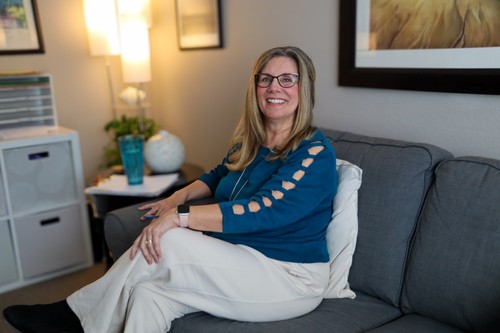
Carolyn Dixon has been with ALCS since 2004 and counsels clients from our North Austin location. She is trained to counsel individuals, couples, and families with a range of issues including anxiety, loneliness, anger, grief and loss, parenting and family challenges, premarital and marital issues, and divorce recovery. Carolyn has a passion for strengthening marriages and is certified in Emotionally Focused Therapy (EFT) for individuals, couples, and families. EFT is an intervention that is based on scientific study of adult love and bonding processes in couples. For more information about Carolyn's practice or to set up an appointment with Carolyn or another ALCS counselor, contact us today!
Posted in Blogs by Carolyn