
Belonging Begins Where Hiding Ends

So many people spend their lives trying to earn connection through perfection, performance, or control, while quietly feeling alone underneath it all. In this post, Hannah Park, MA, LPC-Associate (supervised by Kerry Williamson, MA, LPC-S, LMFT-S, CST) and Certified Inclusive Eating Disorder Specialist (IEDS), explores the connection between shame, vulnerability, and belonging, and why healing often begins the moment we stop hiding.
There is a quote by Brené Brown that says:
“Because true belonging only happens when we present our authentic, imperfect selves to the world.”
I think at the core of most people is this deep desire to belong. To be fully known and still fully loved. Not loved for the polished version of themselves. Not loved for being successful, easy, productive, funny, thin, athletic, or “put together.” But loved as they truly are.
And yet, so many things get in the way of that.
Perfectionism.
Guilt.
Secrecy.
Addiction.
Eating disorders.
Control.
Numbing behaviors.
And underneath so many of these struggles lives shame.
Shame says:
I am not enough.
I am too much.
If people really knew me, they would leave.
I have to earn love, connection, and belonging.
The hard thing about shame is that it thrives in secrecy and isolation. It wants you hidden. It wants you performing instead of connecting. And often the very things we use to cope - food rules, compulsive exercise, body checking, overachievement, staying busy, staying emotionally shut down - can become ways we avoid sitting with deeper feelings of inadequacy, grief, fear, loneliness, or pain.
I see this so often in the therapy room.
People trying so hard to hold everything together while simultaneously feeling deeply alone.
People who look “high functioning” on the outside but internally feel exhausted from trying to maintain control all the time.
People who are terrified that if they stop performing, stop achieving, stop pretending they are okay… they will lose connection.
But healing does not usually happen through more self-criticism or more perfection. Healing happens in connection. And connection is built through vulnerability.
And vulnerability is messy.
It is uncomfortable.
It is awkward sometimes.
It asks us to loosen our grip on image management and allow ourselves to be known - not just for the polished parts, but for the scared, uncertain, struggling parts too.
For many people, vulnerability can feel terrifying because self-protection once served a purpose. Maybe perfection kept you safe. Maybe control helped you cope. Maybe achievement became the way you learned to receive affirmation or worth.
That does not make you weak.
It makes you human.
Healing is rarely about “fixing” yourself. More often, healing starts with honesty.
Honesty about the secret food habits.
Honesty about how much time and energy is spent thinking about exercise or your body.
Honesty about the mental math.
The comparison.
The loneliness.
The anxiety.
The exhaustion of trying to keep it all together.
And vulnerability does not always look dramatic.
Sometimes vulnerability looks like finally admitting you are struggling instead of saying, “I’m fine.”
Sometimes it looks like eating the meal without compensating afterward.
Sometimes it looks like resting.
Crying.
Setting boundaries.
Asking for help.
Letting yourself take up space.
Letting someone sit beside you in your pain instead of trying to earn your worth through perfection.
Because the truth is: we cannot experience true belonging while hiding parts of who we are.
There is something deeply healing about realizing you do not have to earn connection by being smaller, stronger, less emotional, more productive, or more “put together.”
Your worth is not dependent on perfection.
You are worthy of connection even in the middle of healing.
Even in uncertainty.
Even in struggle.
Sometimes recovery does not begin with learning how to love yourself perfectly.
Sometimes it simply begins with deciding to stop hiding.
And often, that is where healing and connection begin.
If you are exhausted from carrying everything alone, therapy can be a space where you no longer have to hide. A space to be honest, messy, human, and fully known without shame. Healing does not happen overnight, but you do not have to navigate it alone. Sometimes the bravest thing you can do is let someone walk beside you in the process.
“Because true belonging only happens when we present our authentic, imperfect selves to the world.”
I think at the core of most people is this deep desire to belong. To be fully known and still fully loved. Not loved for the polished version of themselves. Not loved for being successful, easy, productive, funny, thin, athletic, or “put together.” But loved as they truly are.
And yet, so many things get in the way of that.
Perfectionism.
Guilt.
Secrecy.
Addiction.
Eating disorders.
Control.
Numbing behaviors.
And underneath so many of these struggles lives shame.
Shame says:
I am not enough.
I am too much.
If people really knew me, they would leave.
I have to earn love, connection, and belonging.
The hard thing about shame is that it thrives in secrecy and isolation. It wants you hidden. It wants you performing instead of connecting. And often the very things we use to cope - food rules, compulsive exercise, body checking, overachievement, staying busy, staying emotionally shut down - can become ways we avoid sitting with deeper feelings of inadequacy, grief, fear, loneliness, or pain.
I see this so often in the therapy room.
People trying so hard to hold everything together while simultaneously feeling deeply alone.
People who look “high functioning” on the outside but internally feel exhausted from trying to maintain control all the time.
People who are terrified that if they stop performing, stop achieving, stop pretending they are okay… they will lose connection.
But healing does not usually happen through more self-criticism or more perfection. Healing happens in connection. And connection is built through vulnerability.
And vulnerability is messy.
It is uncomfortable.
It is awkward sometimes.
It asks us to loosen our grip on image management and allow ourselves to be known - not just for the polished parts, but for the scared, uncertain, struggling parts too.
For many people, vulnerability can feel terrifying because self-protection once served a purpose. Maybe perfection kept you safe. Maybe control helped you cope. Maybe achievement became the way you learned to receive affirmation or worth.
That does not make you weak.
It makes you human.
Healing is rarely about “fixing” yourself. More often, healing starts with honesty.
Honesty about the secret food habits.
Honesty about how much time and energy is spent thinking about exercise or your body.
Honesty about the mental math.
The comparison.
The loneliness.
The anxiety.
The exhaustion of trying to keep it all together.
And vulnerability does not always look dramatic.
Sometimes vulnerability looks like finally admitting you are struggling instead of saying, “I’m fine.”
Sometimes it looks like eating the meal without compensating afterward.
Sometimes it looks like resting.
Crying.
Setting boundaries.
Asking for help.
Letting yourself take up space.
Letting someone sit beside you in your pain instead of trying to earn your worth through perfection.
Because the truth is: we cannot experience true belonging while hiding parts of who we are.
There is something deeply healing about realizing you do not have to earn connection by being smaller, stronger, less emotional, more productive, or more “put together.”
Your worth is not dependent on perfection.
You are worthy of connection even in the middle of healing.
Even in uncertainty.
Even in struggle.
Sometimes recovery does not begin with learning how to love yourself perfectly.
Sometimes it simply begins with deciding to stop hiding.
And often, that is where healing and connection begin.
If you are exhausted from carrying everything alone, therapy can be a space where you no longer have to hide. A space to be honest, messy, human, and fully known without shame. Healing does not happen overnight, but you do not have to navigate it alone. Sometimes the bravest thing you can do is let someone walk beside you in the process.
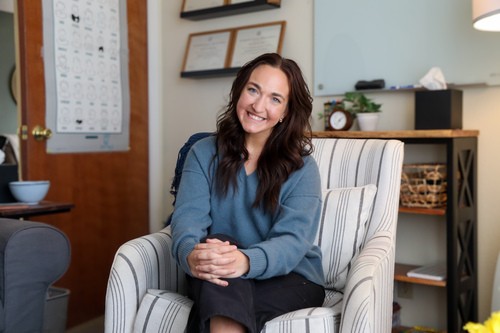
Hannah works with children, teens, adults, and families, and is passionate about helping people struggling with self-harm, trauma, anxiety, eating disorders, disordered eating, body image concerns, OCD, and sports performance. As she comes to understand each client as a unique individual, she draws from a variety of therapeutic approaches to foster growth tailored to their specific story.
For specific questions, email Hannah at hannah@abundantlifecounseling.com.
For specific questions, email Hannah at hannah@abundantlifecounseling.com.
Posted in Blogs by Hannah